What 110,000+ Caregiver Applicants Are Telling Us – Home Care Strategy Lab
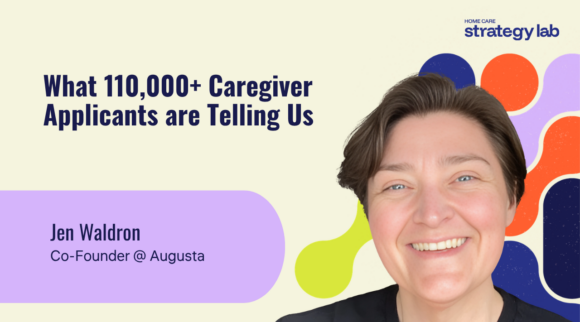
What 110,000+ Caregiver Applicants Are Telling Us
Home Care Strategy Lab with Miriam Allred
One of the biggest challenges in home care recruiting today isn’t a lack of applicants — it’s a lack of alignment.
In this episode of Home Care Strategy Lab, Jen Waldron, co-founder of Augusta, shared a clear perspective: recruiting, sales, and scheduling are often operating in silos — and that disconnect is costing agencies time, money, and retention.
Recruiters are measured on hires. Schedulers are measured on filling shifts. Sales teams are focused on bringing in new clients. Individually, these goals make sense. But together, they often lead to mismatches — caregivers hired for roles that don’t exist, shifts that go unfilled, and ultimately, higher turnover.
The agencies that are winning are the ones that align these functions. They think holistically about who they need to hire based on real demand, not just who they can hire.
Match First, Optimize Later
A major theme throughout the conversation was simple but powerful: better matching drives better outcomes.
While many agencies focus heavily on resumes, experience, and personality early in the process, the data tells a different story. The most successful matches come down to a few core factors:
- Location
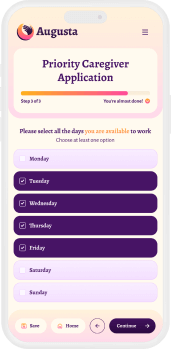
- Schedule availability
- Required skills
In fact, most caregiver churn can be traced back to mismatches in these areas — not a lack of qualifications or effort.
If a caregiver wants 20 hours but gets 10, or prefers a short commute but is scheduled far away, they’re likely to leave — even if everything else is a good fit.
The takeaway: prioritize practical fit first, then layer in the rest.
Speed Is No Longer Optional
Another key insight: the hiring window is shrinking.
Most hires happen when interviews are scheduled within the first few days of application. Delay too long, and top candidates move on.
This shift reflects a broader reality — caregivers are applying to multiple jobs at once and often need work immediately. Agencies that move quickly and reduce friction in their process are far more likely to secure top talent.
“Flexible Hours” Needs a Redefinition
Flexible scheduling is consistently the most requested benefit by caregivers — yet it remains one of the most misunderstood.
Flexibility doesn’t mean unlimited availability or constantly changing schedules. It means fitting work into real life — balancing childcare, transportation, and financial needs.
Caregivers are often piecing together hours across multiple jobs. They’re not just asking for flexibility — they’re asking for predictability within their constraints.
Agencies that take the time to understand this — and build schedules accordingly — see stronger retention and engagement.
Small Changes, Big Impact
The conversation highlighted a series of small but meaningful improvements agencies can make:
- Prioritize location and schedule early in the process
- Move faster with top applicants
- Reduce unnecessary barriers (like long applications)
- Align recruiting with real-time demand
- Clearly define what “flexibility” actually means
None of these are silver bullets. But together, they create a more efficient, more human recruiting process.
The Big Takeaway for Home Care Leaders
Recruiting success doesn’t come from doing more — it comes from doing the right things, in the right order, with the right alignment.
Agencies that treat recruiting as a connected system — not a standalone function — are the ones pulling ahead.
Because in home care, the goal isn’t just to hire more caregivers.
It’s to hire the right caregivers — for the right clients — at the right time.
To see more from Miriam Allred and the Home Care Strategy Lab podcast, visit their website here: https://www.homecarestrategylab.com/